The Congo Blind Eel
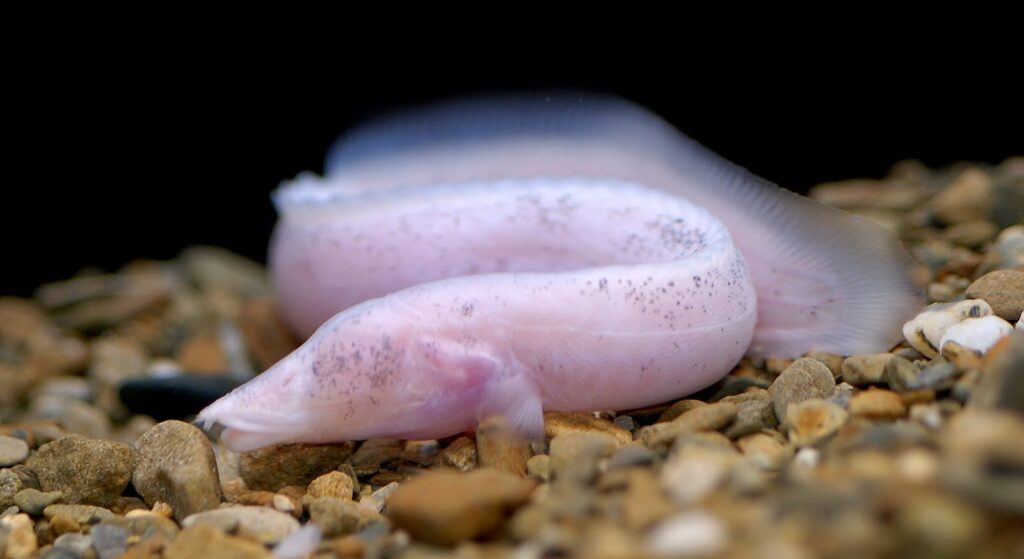
Mastacembelus brichardi is a rare species of the Mastacembelus genus. Many people don’t even know they exist.
Size: 5 inches
Temperament: Peaceful and shy
Diet: Any small invertebrates, frozen or live
Temperature: 72-84F
Lighting: Low, dim
Habitat: Rocky with strong current
*Like with other eels in my experience, they are hardy to a wide range of pH, GH, KH, and mineral content. ALL eels require excellent water quality with 0 ammonia and nitrites to thrive. Keep reading to see my specific water parameters for spawning.
Mastacembelus brichardi are nearly eyeless, have almost no pigment, and come from extreme habitats. These eels live their mysterious lives in the lower Congo River in Africa, the deepest river in the world. Here, the currents are so strong and unpredictable that it is dangerous to traverse by boat. The extreme currents form an underwater landscape that just contains rocks and crevices. The tremendous currents act as effective barriers to fish population movement, which has evolutionarily isolated these eels. It is a special place for isolated, functionally weird, and blind fish.
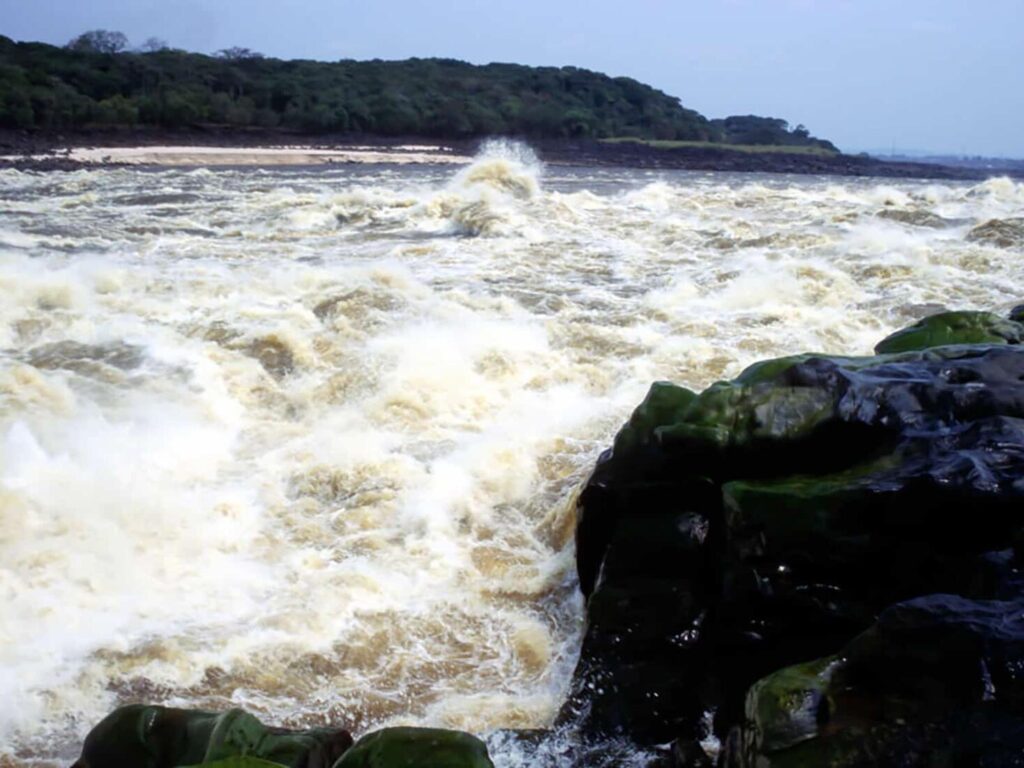
Their habitat information tells us many useful things about keeping them in captivity that’s a bit different compared to other species:
- They come from highly oxygenated environments.
- Fast flowing water has increased surface area for oxygen exchange, increasing the dissolved oxygen available for fish. For my M. brichardi, I provide surface agitation with an air stone and point my filter outflow just slightly upwards.
- The landscape is composed of rocky crevices.
- M. brichardi spend the majority of their time in the confines of rocks. Given a choice, they choose rocks over wood and other hard scape materials. I’ve made the rock crevices in their tank face outwards so I often still see them and they poke their faces out of the rocks into the current.
- The strong current is a large aspect of their lifestyle.
- Despite being small eels, they are strong swimmers. While they do rest often, they have periods of eel zoomies, especially at dusk.
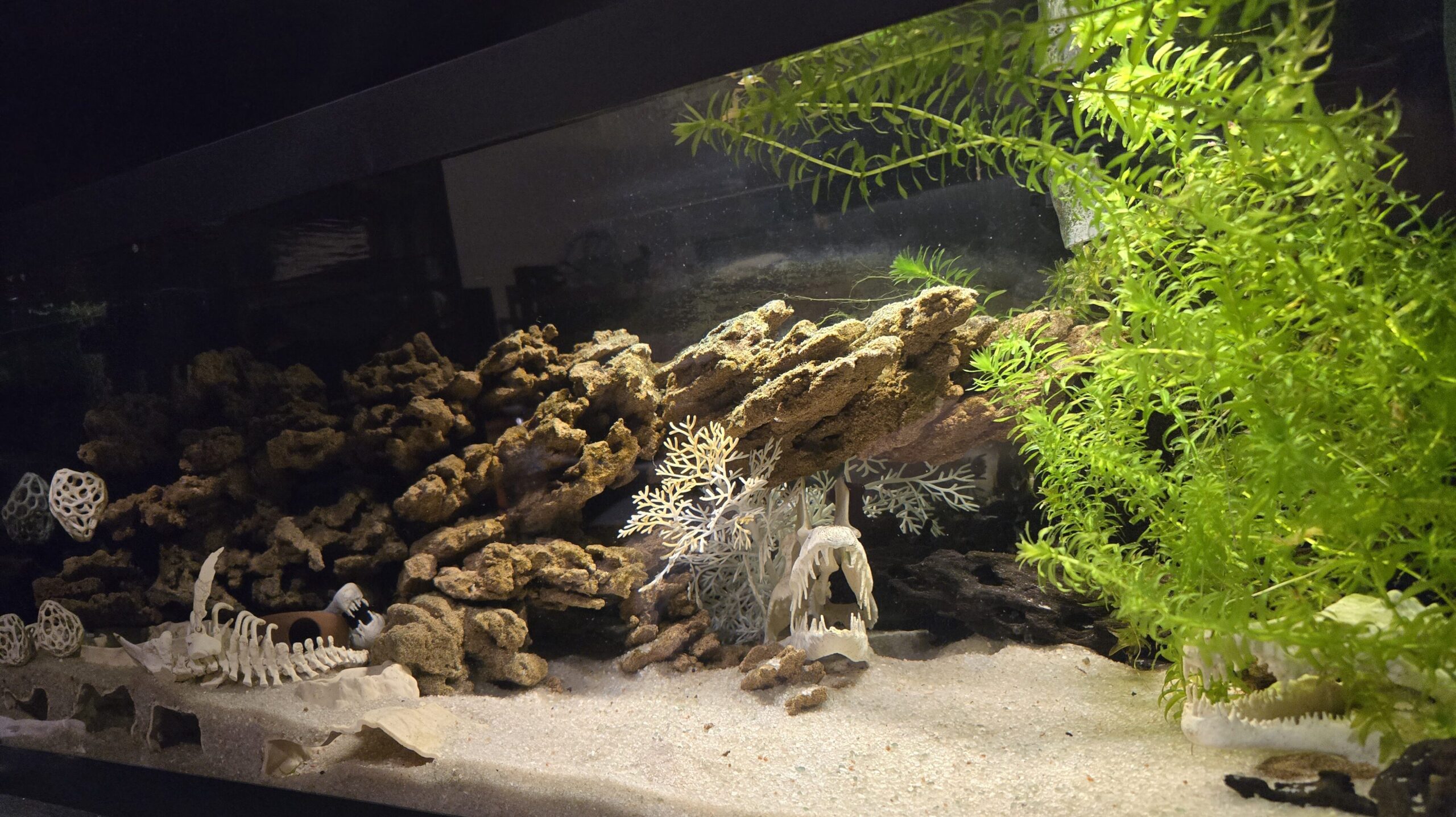
Eventhough they don’t have external eyes, they can sense light. I find that they are more comfortable and hide less when the lighting is dim.
Each individual has incredible spatial memory despite having no vision. They claim their own pocket in the rocks and always return to the same crevice.
They have an incredible sense of smell. They will sense food and start stirring within a second of food touching the water. That’s faster than any of my other eels when they’re hiding(but most of my other eels get excited the second they see me).
Breeding Mastacembelus brichardi
Group of 1 male, 2 females
Temperature: 82-84F
Light cycle: 8hrs on/16hrs off
Outdoor season: summer
pH: 6.4-7.0
GH: 2-8 dGH
KH: 0 dKH
Nitrate: 0ppm
*
Males vs females
Differentiation of males and females for this species is easy once they reach maturity. Males have a distinct hump on their face, whereas females’ faces remain slim.
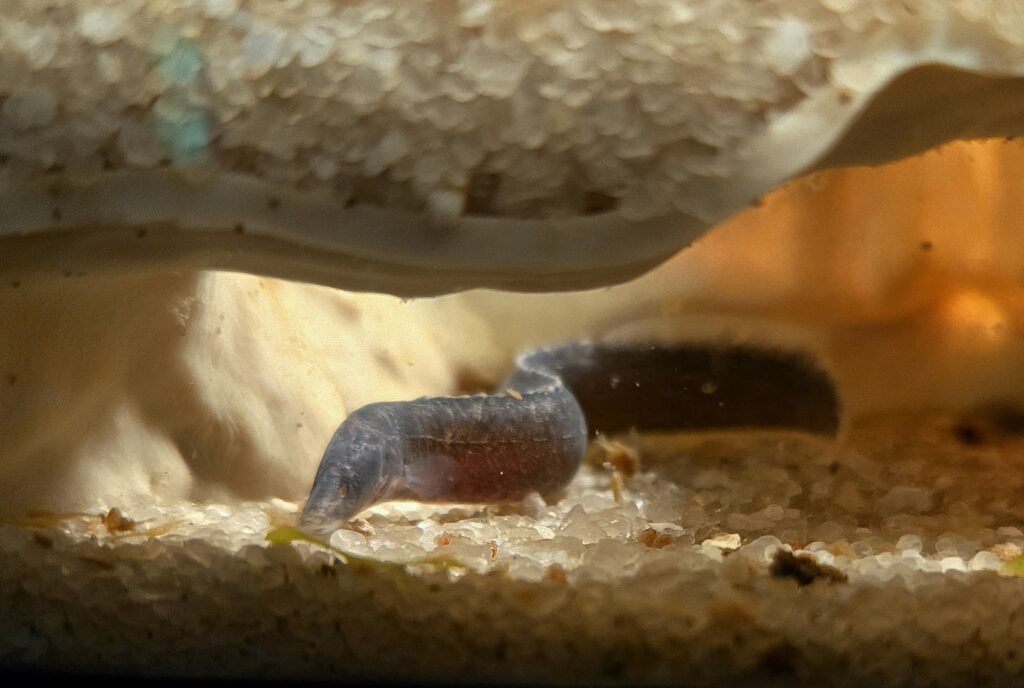
The most remarkable aspect of M. brichardi spawning is the strong parental involvement of the father. My male excavated a cave in the rocks on the sand. He is the most secretive of my trio and I haven’t seen his nursery, but he spends the majority of his time in there. I once saw a photo on Facebook of a male in a cave with eggs. Based on that post and my observations, males protect their eggs in a cave. Even after the fry hatch, they seem to stay close to him.
Neither him nor the females have ever attempted to predate on the fry. I find this to be true of other eel species with their offspring, too.
***I don’t have very many good photos of my M. brichardi because they are so shy and spastic!***
Resources:
The Congo River: https://en.wikipedia.org/wiki/Congo_River
Leave a Reply