One of the biggest issues in keeping spiny eels is misidentification. Eels get imported under generic labels that mean nothing about their true identity. All of the common names for eels, such as, “zig zag eel” can refer to completely different species of eels. Using scientific names is a precise way to refer to eels and helps people get accurate information about the right species. It is important to identify specific species because some eels stay small, some get huge, and some have special care considerations.
So please, please use scientific names to refer to spiny eels to minimize confusion. They are rare fish, and it is our responsibility as eel keepers to refer to them as their actual names.
Here is a visual guide that may help you identify your eel. It is split into the 2 spiny eel genera(Macrognathus, Mastacembelus) and then in order from most common to least common. I also list their typical adult size in aquariums.
Their patterns are the most important part of identifying them. They often vary in the lightness/darkness of their colors.
This guide does not list all species, just the ones you are most likely to encounter in the fish trade.
Macrognathus
The Macrognathus genus is identifiable by having a cadual(tail) fin separated from their other fins. However, one exception to this rule exists: Macrognathus maculatus. It can be sometimes difficult to get a good look at their tails so luckily there are other differences.
Macrognathus is also distinct because of their rostrum(nose) morphology. They have proportionately larger noses with different anatomy than Mastacembelus. Macrognathus are also generally smaller and are found in southeast Asia. Once you get an eye for them, it becomes easier to distinguish the different genera.
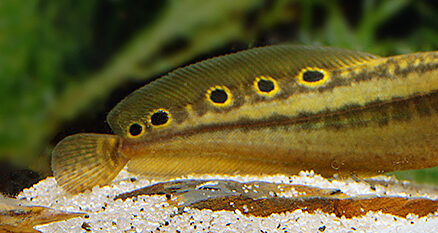
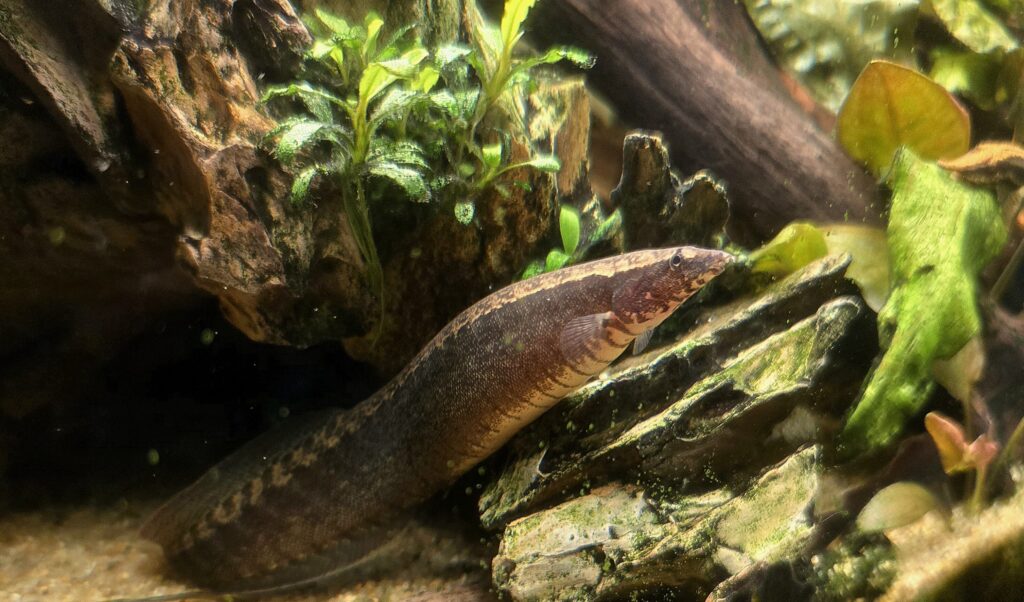
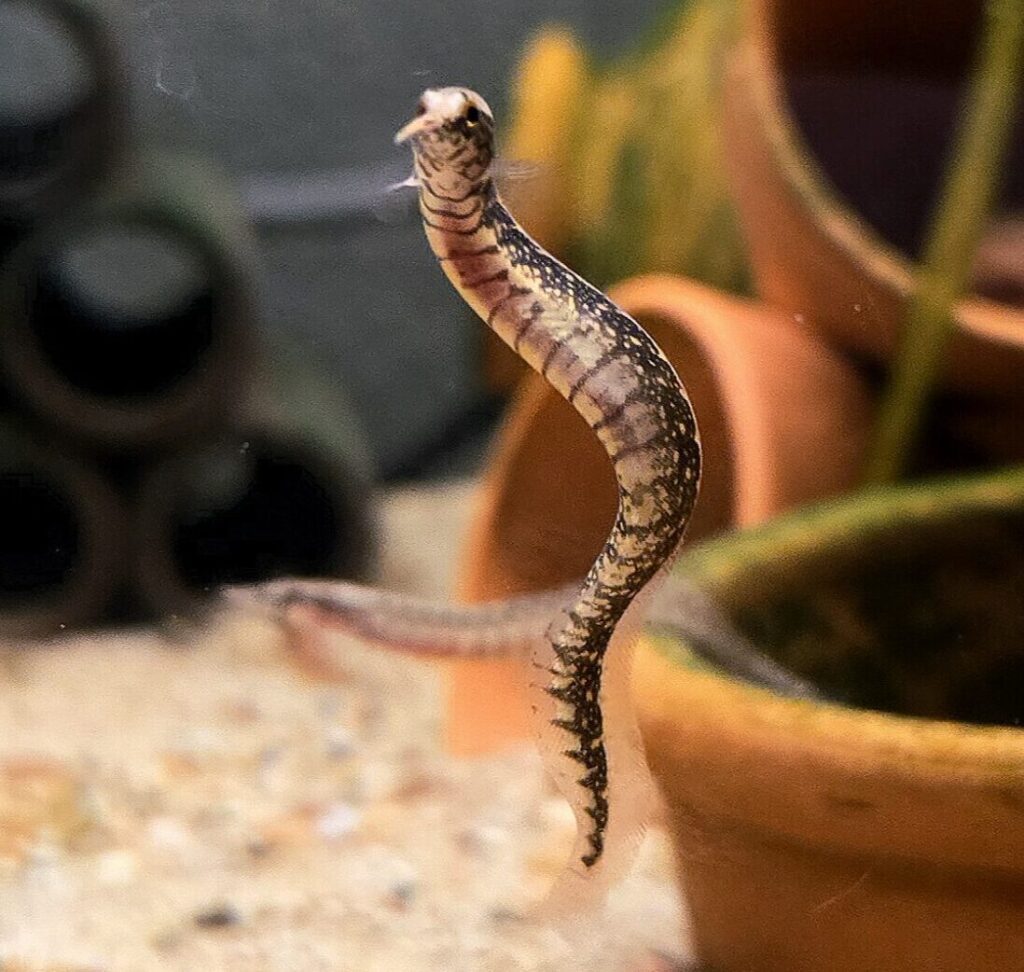
Macrognathus circumcinctus
Distinguishable by: vertical bands extending all the way under their bellies. Their tail fins can appear continuous, but are separate on closer look.
Adult size: 5-7 inches long
Note: These get called all sorts of names, “half banded eel,” “zig zag eel,” “zebra eel,” and many more.
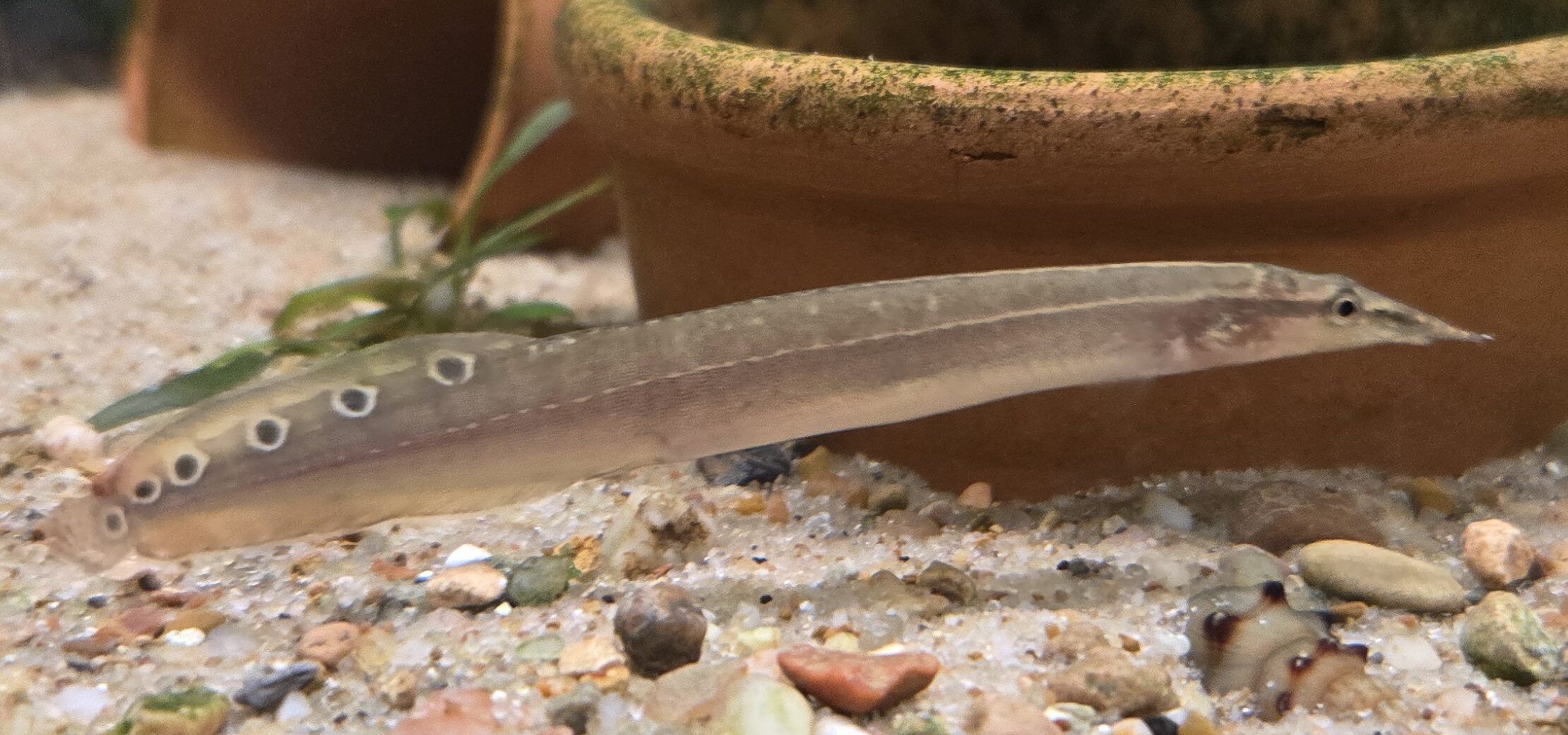
Macrognathus siamensis
Distinguishable by: eye spots on the tail and a fine stripe running down the lateral line.
Adult size: 5-6 inches long
Note: Occasionally has red hue on tail. Sometimes called “peacock eel”
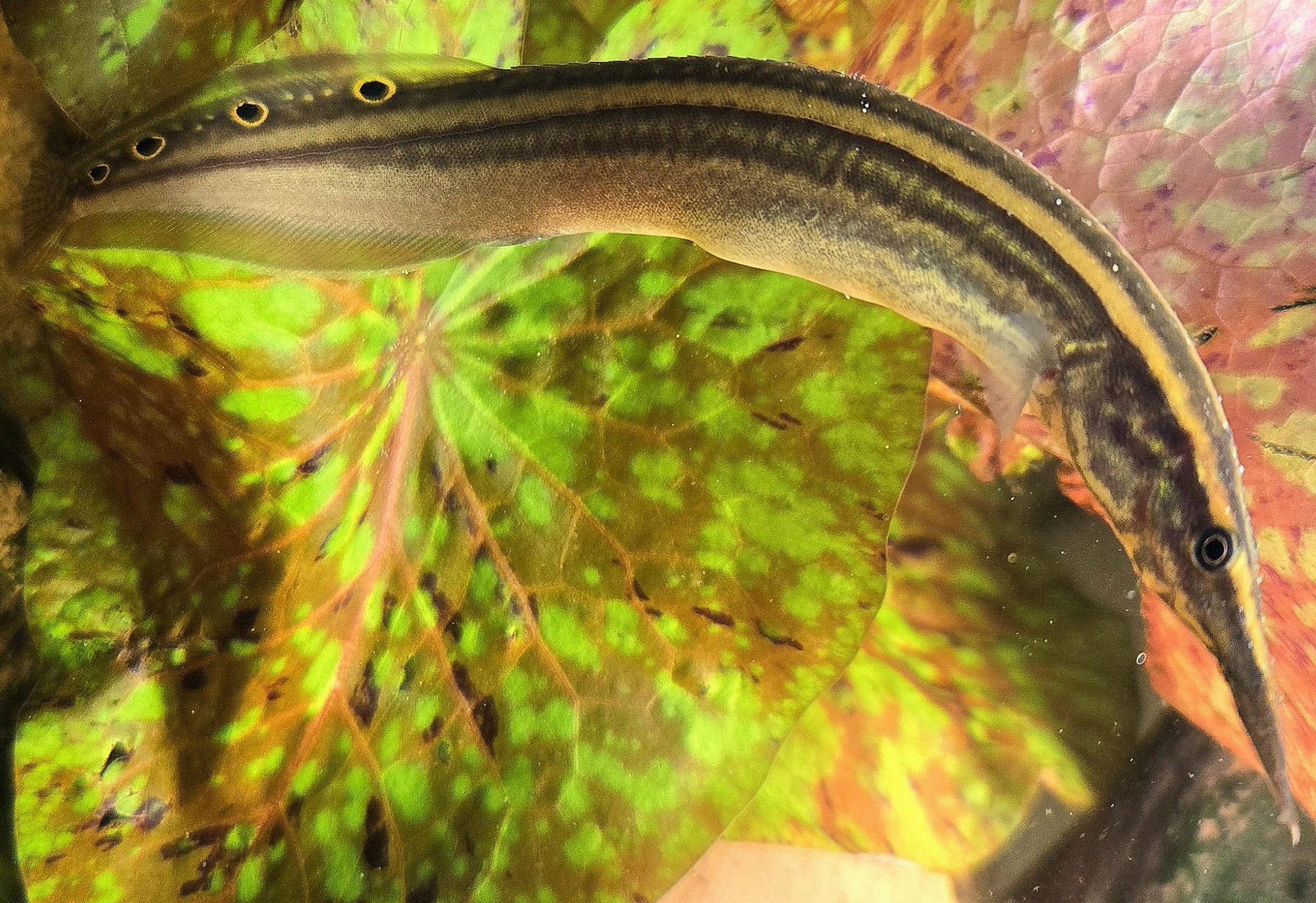
Macrognathus aral
Distinguishable by: eye spots on the tail and thick, bold stripes down the body.
Adult size: 7-10 inches long
Note: Mine only eat live earthworms. Also sometimes called “peacock eel”
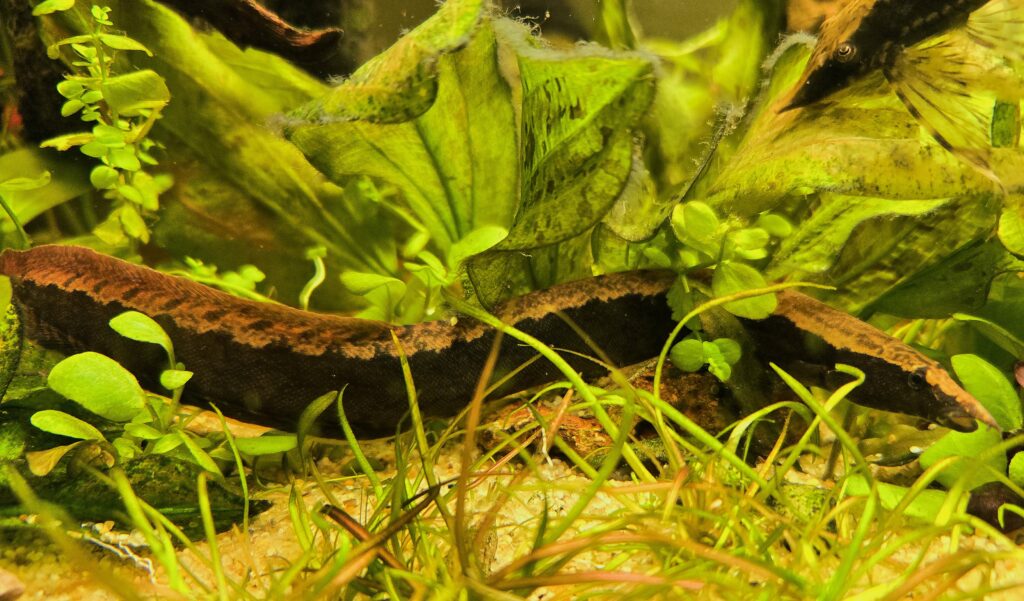
Macrognathus maculatus
Distinguishable by: continuous tail fin, proportionately longer body than many other Macrognathus. No banding on belly.
Adult size: 8-10 inches long
Note: often sold mixed in with M. circumcinctus. Also undergoes more drastic color changes.
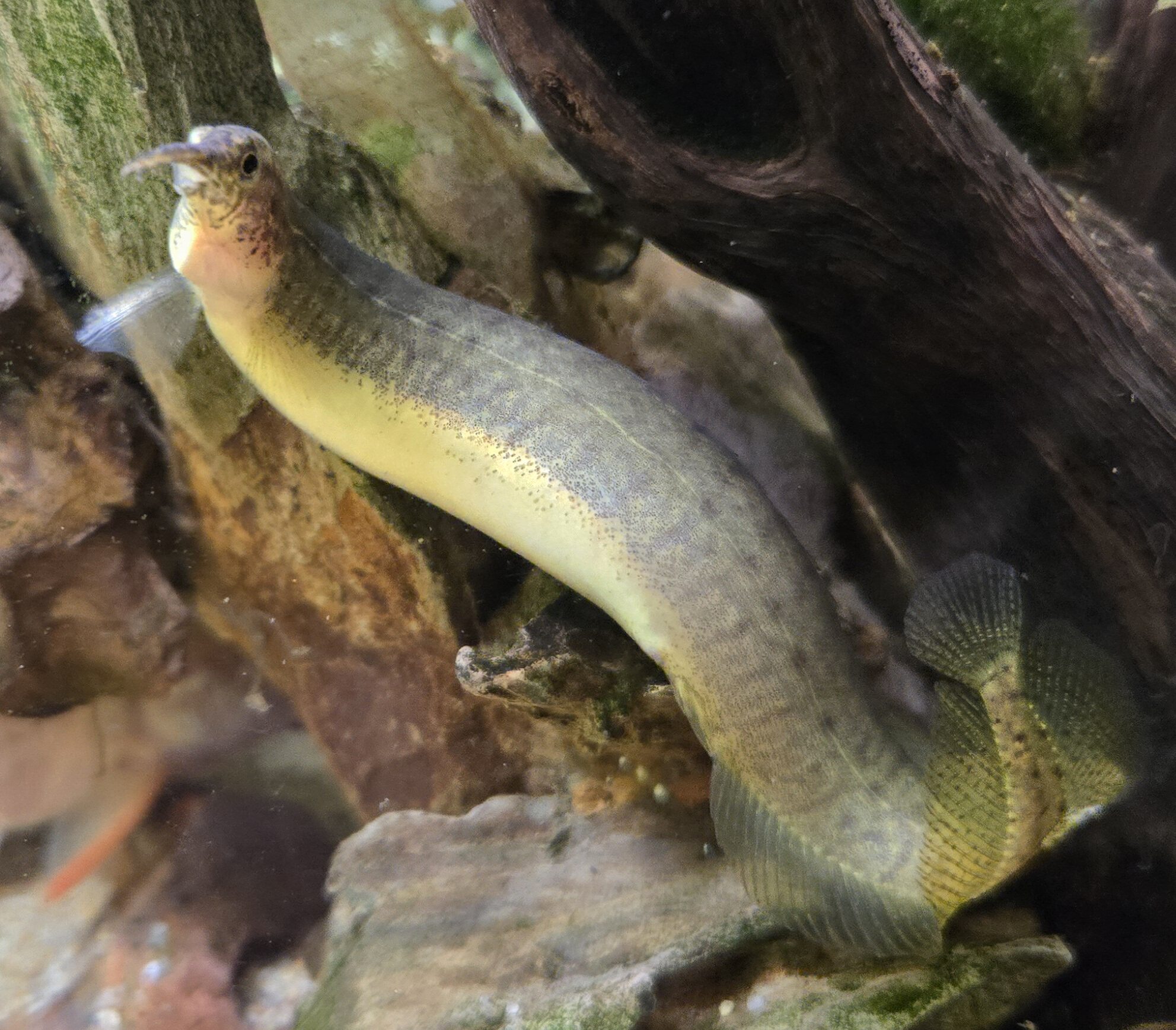
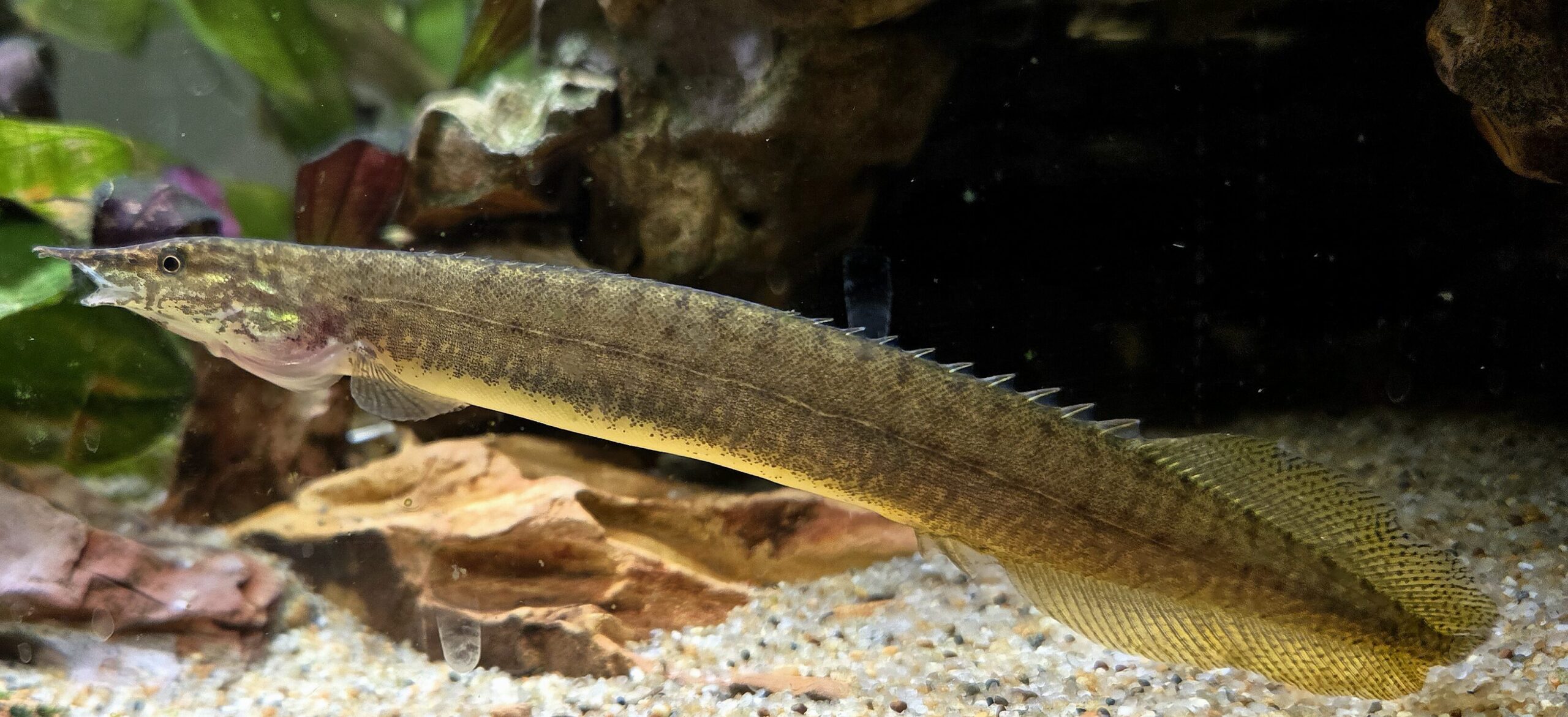
Macrognathus pancalus
Distinguishable by: greenish/yellow hue on body with yellow tail fin. Fine, light spotted pattern.
Adult size: 5-6 inches long
Note: sometimes called “yellow tail eel”
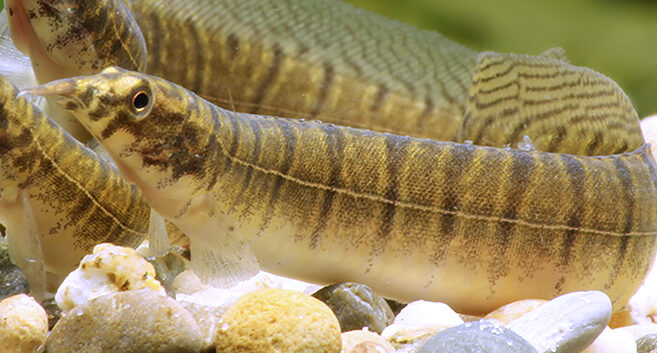
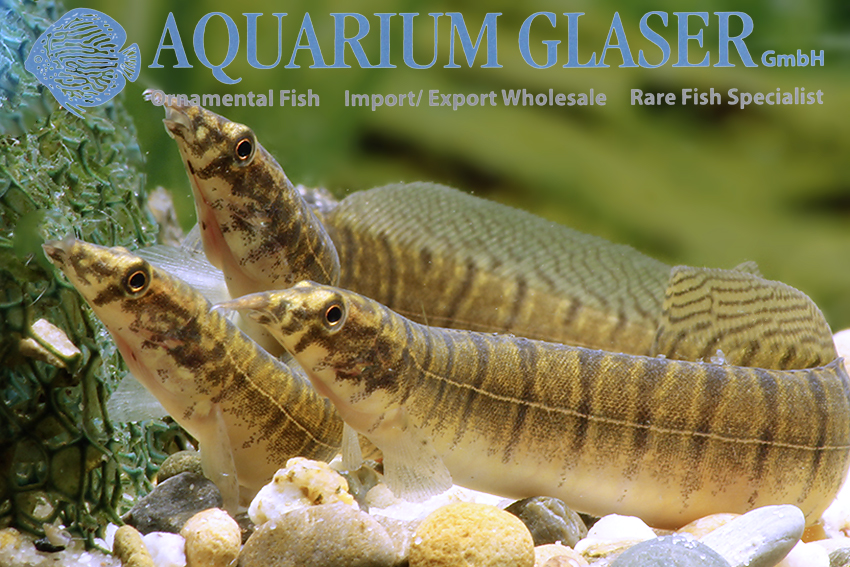
Macrognathus zebrinus
Distinguishable by: greenish hue on body with light banding.
Adult size: 4-6 inches long
Note: banding occasionally extends under bellies, but does not have dorsal stripe that M. cirumcinctus does. Sometimes called “zebra eel”
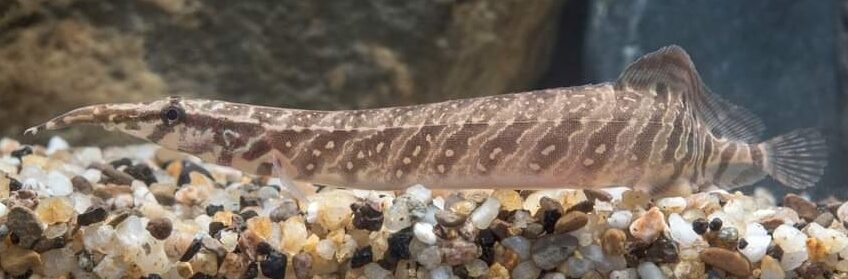
Macrognathus tapirus
Distinguishable by: eye spots on tail, thick slanted bands with thin stripe running down lateral line. Big nose!
Adult size: 6-7 inches long
Note: banding can become quite dark in adults. Seriously big nose! Sometimes called “tapir eel”
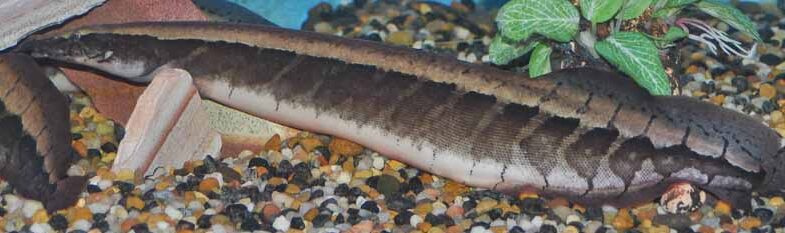

Macrognathus kris
Distinguishable by: unique tail pattern, tail is obviously separate, bold contrasting pattern.
Adult size: 18 inches long
Note: the largest Macrognathus species. These are so rare and expensive that you’re highly unlikely to casually come across one without knowing what it is, but I quite like them so now you get to learn about them! Sometimes called “Borneo python eel”
Mastacembelus
The Mastacembelus genus is distinguishable by having a continuous fin that goes around the entire tail. They also have proportionally larger mouths with proportionately smaller noses. Most Mastacembelus species are from Africa, but some species also come from southeast Asia and the Middle East.
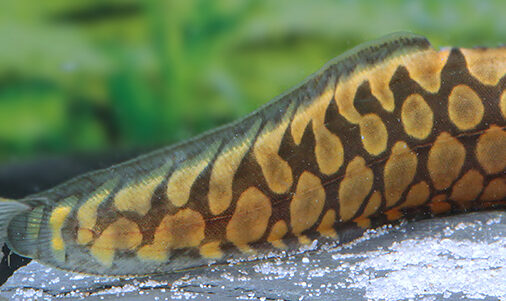
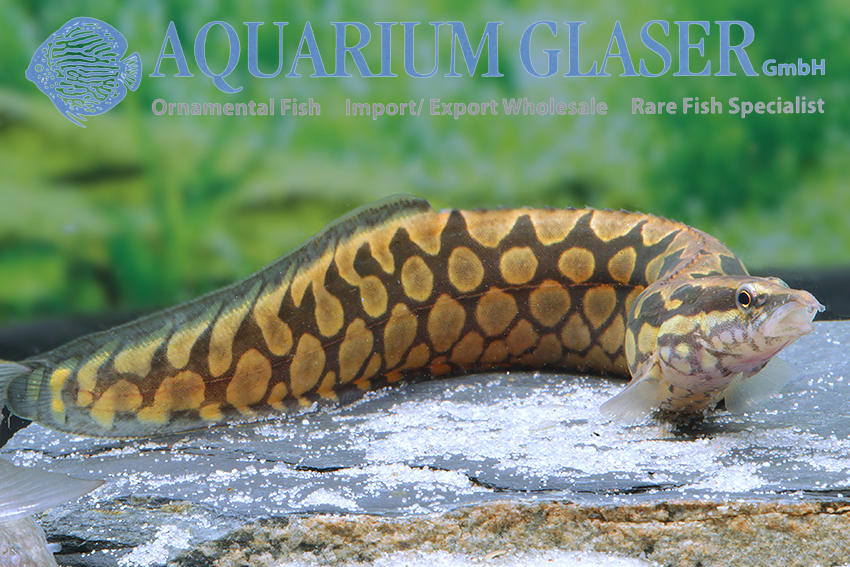
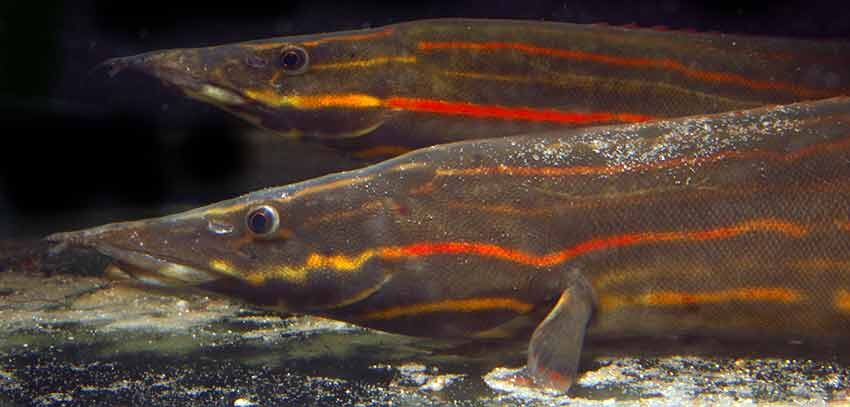

Mastacembelus erythrotaenia
Distinguishable by: unmistakable and iconic appearance.
Adult size: 36 inches long
Note: the largest species of spiny eel. Commonly known as “fire eel”
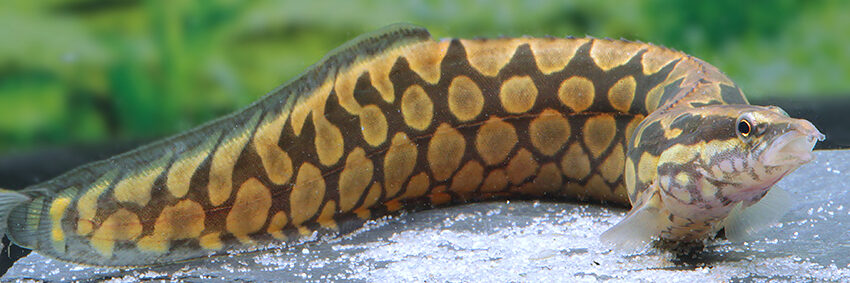
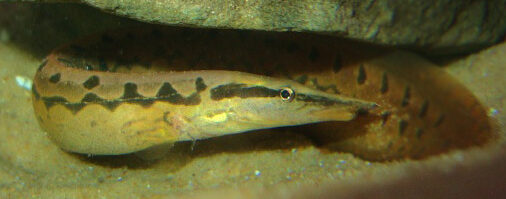
Mastacembelus armatus
Distinguishable by: spotted pattern all over body with dark background that can be reduced to a zig zag pattern in some localities.
Adult size: 24 inches long
Note: often become territorial as they mature, not recommended to keep with other eels. Sometimes called “tire track eels” but also get common names mixed up with Macrognathus circumcinctus.
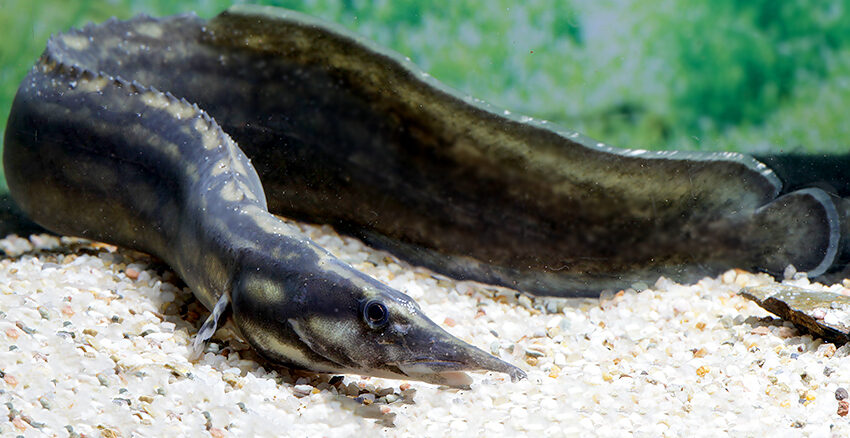
Mastacembelus unicolor
Distinguishable by: light dotted/broken stripe down the back, dark background color, can have yellow band on pectoral fins. They look similar in appearance as M. erythrotaenia without red markings as they transition to adult coloration.
Adult size: 24 inches long
Note: changes to black as they mature.
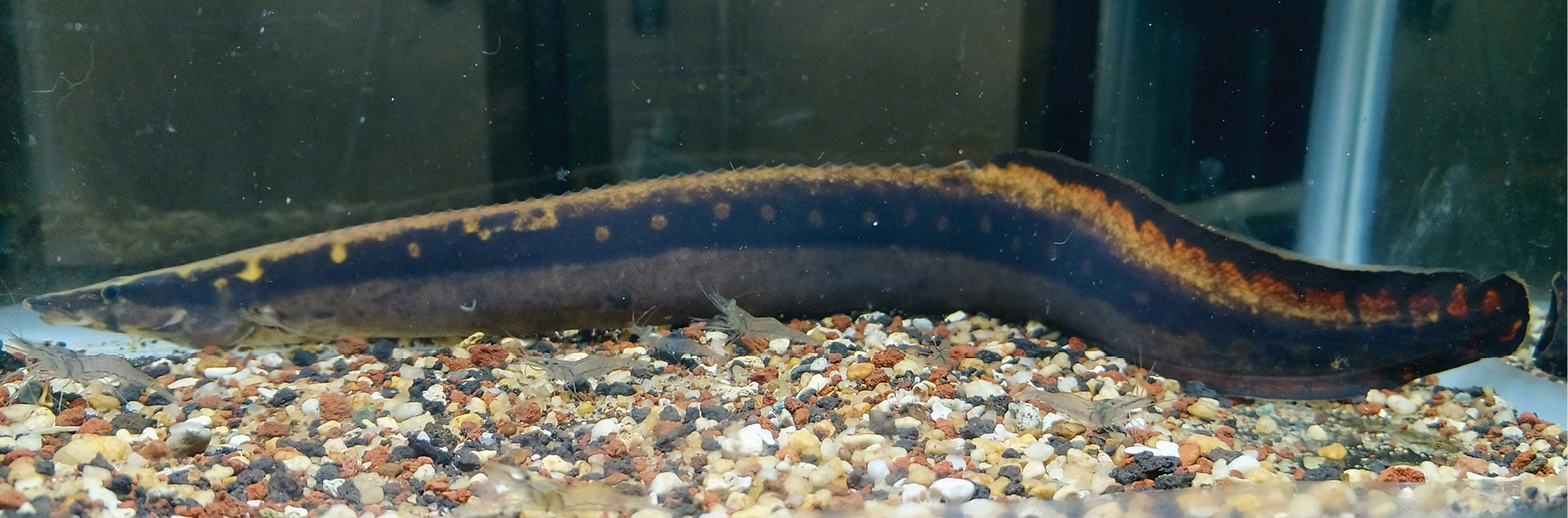
Mastacembelus notopthalmus
Distinguishable by: dark, thick upper lateral stripe that has light, often vibrant spots that match the dorsal stripe that extends to the tail.
Adult size: 16 inches long
Note: sometimes called “black pearl eel”
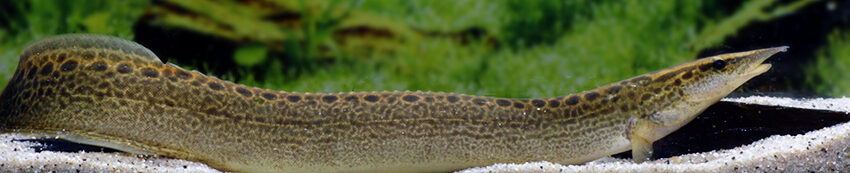
Mastacembelus pantherinus
Distinguishable by: row of larger spots on sides near dorsal with rows of finer spots descending to ventral.
Adult size: 18 inches long
Note: sometimes called “panther eel”
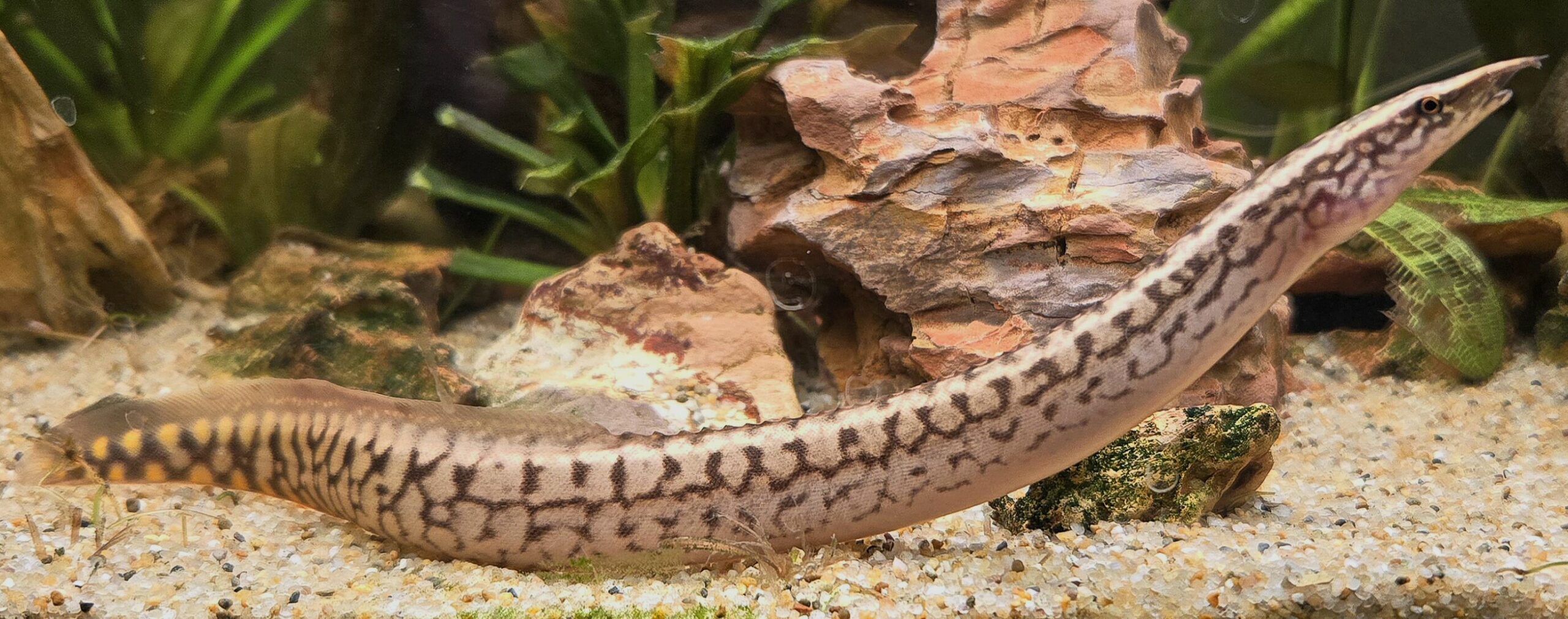
Mastacembelus liberiensis
Distinguishable by: orange hued spots on tail. Dorsal stays light, but body can be dark.
Adult size: 12-14 inches long
Note: changes color drastically based on mood. Sometimes called “orange spot eel”
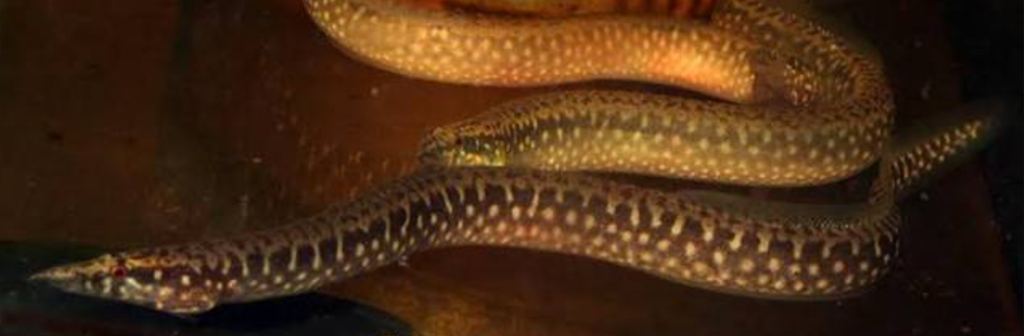
Mastacembelus cryptacanthus
Distinguishable by: spotted and “dripping” pattern on sides of body
Adult size: 10-12 inches long
Note: often mislabeled as M. frenatus or called “starry night eel”
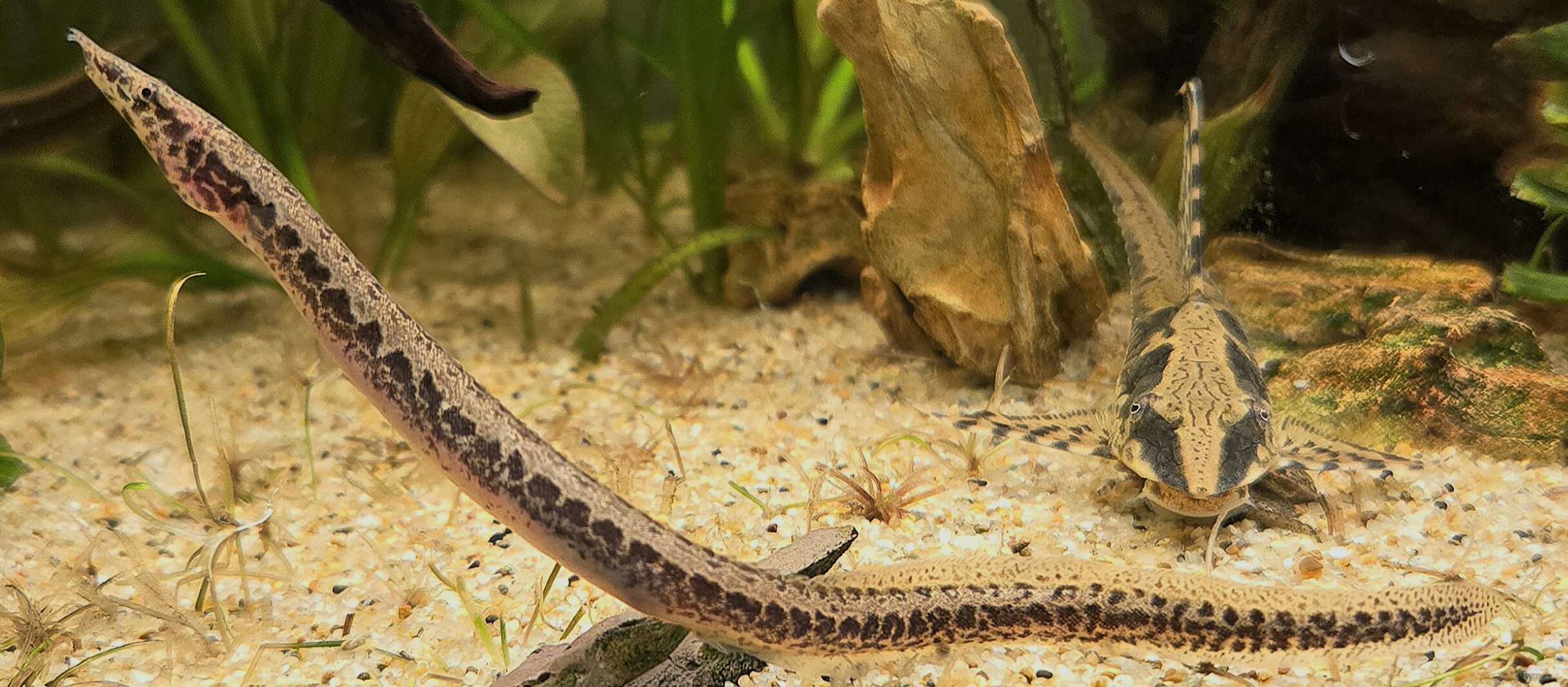
Mastacembelus greshoffi
Distinguishable by: “giraffe-like” markings down sides of thin body.
Adult size: 10-12 inches long
Note: very thin body with small eyes.
I have kept many of the smaller species on this guide, and provide entire pages dedicated to them on my website so feel free to explore to learn more about these eels!
Hopefully this helps to identify your eel! If you can’t find your eel above or need help identifying your eel, don’t hesitate to reach out and I can identify your eel.
**All photos are mine unless a source is listed for them.
***If you have better photos I can use for the species that aren’t mine, please let me know!