There’s a huge lack of information available on keeping spiny eels, most keepers have to improvise and most eels that are imported into the US don’t live past a few months in peoples’ tanks at home. Spiny eels are unique and as such, require special considerations to care for them. Let’s talk about some eel keeping tips and guidelines to keep your eels happy and healthy!
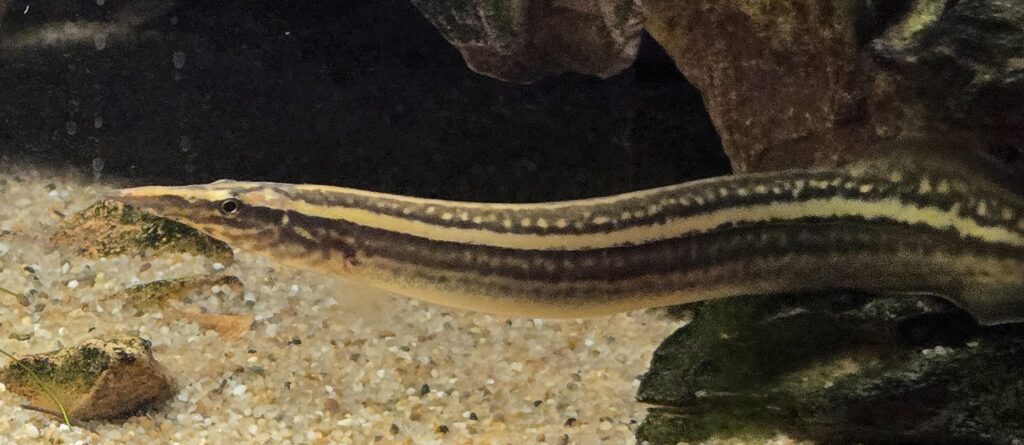
One of my male Macrognathus aral, Corneelius.
They jump!
Spiny eels are curious and nervous! They can – and will – search for openings in the top of your tank and rocket right out. They need a tank with a very secure lid with no holes or gaps.
Special Food Requirements
Spiny eels don’t eat the same stuff as ‘typical’ aquarium fish. They don’t usually want pellets or flakes. They want raw and sometimes even live prey. Popular choices youll find at the fish store include frozen mysis shrimp, krill, blood worms, and brine shrimp. You can even find some options at the grocery store, especially for larger eels, including small raw cocktail shrimp, raw scallops, and raw fish fillets. And I’ve never met an eel that doesn’t love live earthworms- it’s the best way to win an eel’s heart. Variety is best- find what your eel likes and they will beg for more!
A common question that gets asked is, “how do I get my eel to eat pellets??” and my answer has always been, “don’t get your hopes up, they may never eat pellets.” However, recently one of my eels just spontaneously decided to eat pellets. My other eels saw him eating the pellets and decided they wanted pellets, too. So I guess they can just decide on their own if they want pellets. But I’ve certainly never been able to make them eat pellets on purpose.
Delicate Skin
They need sand. Fine, coarse, doesn’t matter. It just has to be rounded, soft, and not big enough to be considered pebbles. Eels have soft skin with very fine scales. Their delicate skin can be scratched, scraped, or bruised by sharp substrate. They bury themselves when they feel uncomfortable, and gravel can beat up their skin when they are in a panic. Aquasoil is not ideal either because they will just make a mess of it.
Tank Mate Considerations
Although spiny eels are compatible with many community fish, there are some tank mates that should not be in the same tanks as eels. Generally, never house eels with aggressive/nippy fish or fish small enough to fit in their mouths, especially with the larger species. Also, don’t crowd the bottom area of the tank with other bottom-dwelling fish. Eels like to have personal space.
Eels Have Social Lives!
Single eels tend to be sad eels. Eels need eel friends! Without other eels to socialize with they get stressed and bored. They will hide all the time, refuse to eat, and not interact with you. A happy eel has at least one friend- and trust me, they’re worth it! With someone else to give them a confidence boost, you’ll see all sorts of interesting behaviors and interactions. They will even interact with you more!
Hidey Holes
Eels are nervous and shy creatures, especially in new environments. They need lots of hiding spaces! It sounds contradictory, but the more hides they have, the more comfortable and outgoing they will be.
>>On that note, eels love live plants! It’s a common misconception that eels can’t be with plants out of fear that they uproot them from digging in the sand. The truth is, a happy eel will rarely dig in the sand and disturb plants. Eels love to hide in plants, investigate plants with their noses, and rest on them.
Identify Your Eel!
As a rare fish, spiny eels are frequently mislabeled in stores. Identifying what eel you have can mean the difference between a petite princess and a gargantuan gargoyle of an eel.
Click here for an easy visual guide to different species of eels!
If you can’t find your eel in my visual guide or need help identifying your eel, don’t hesitate to reach out and I can identify your eel.
On a personal request- please please please call spiny eels by their scientific names. Common names are usually inaccurate and mislabel eels.