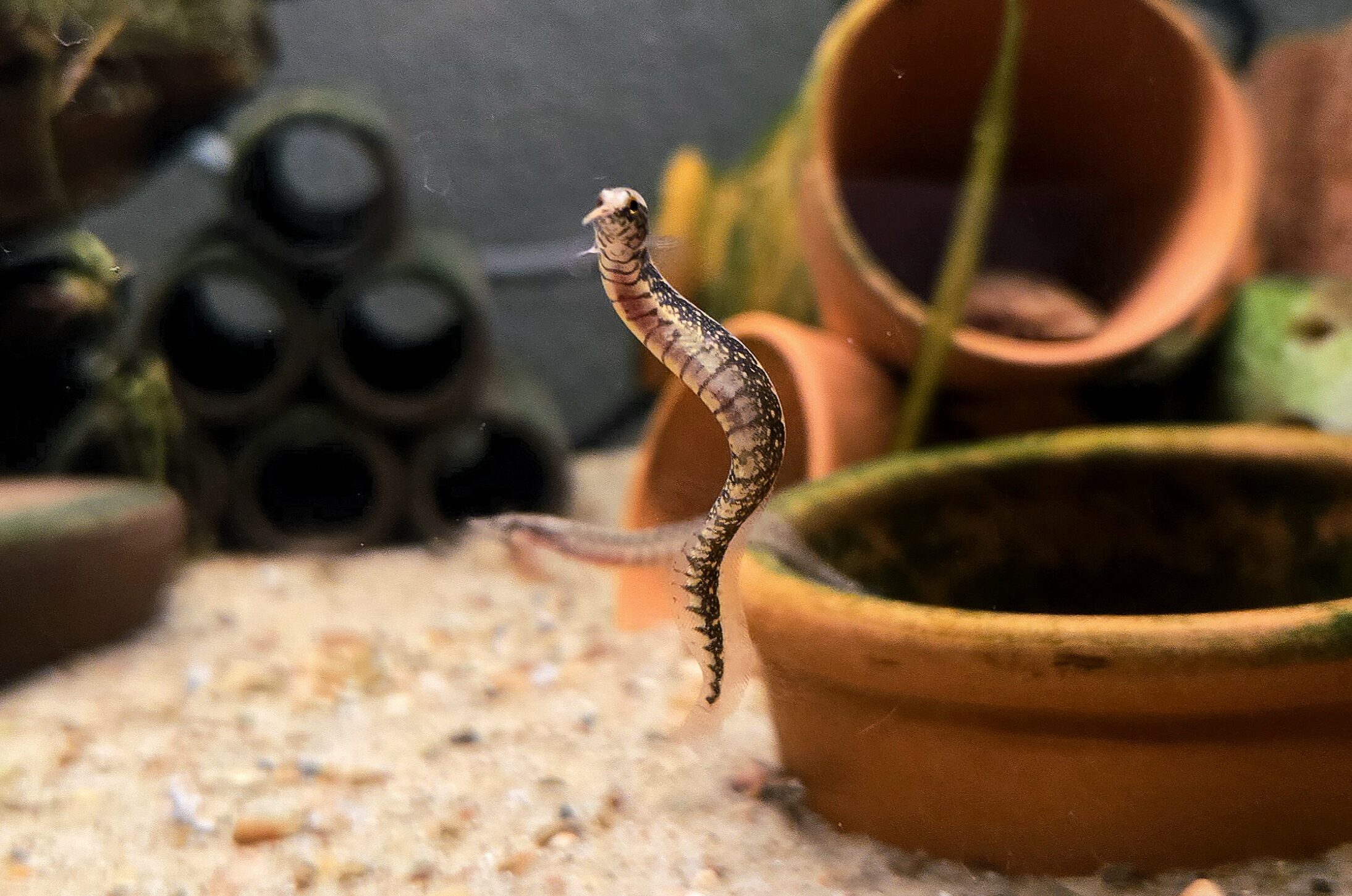
The Half-Banded Eel
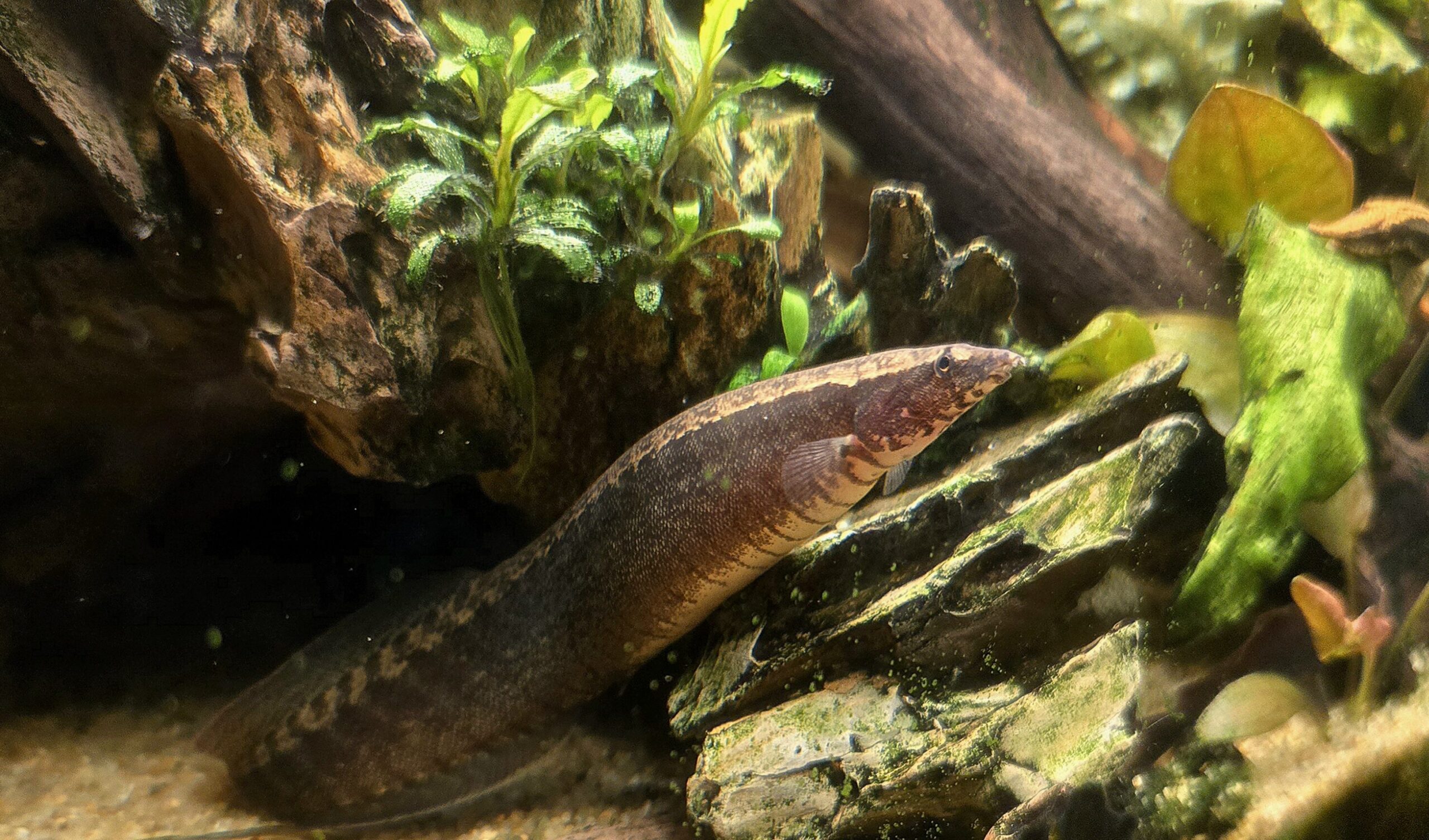
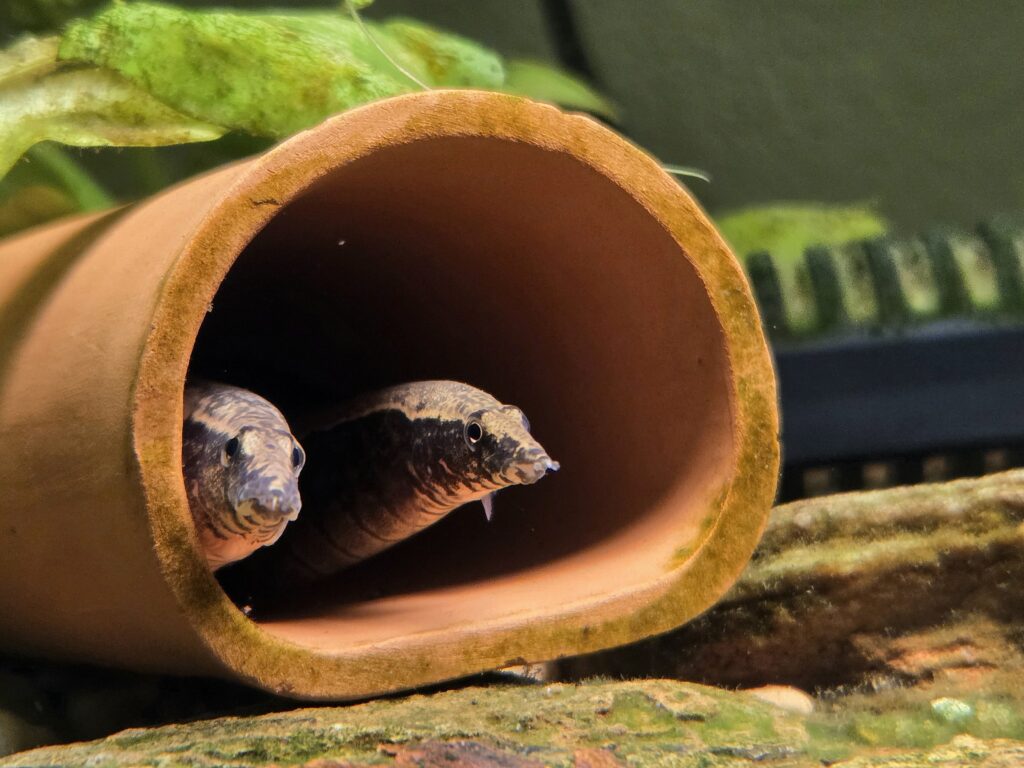
Macrognathus circumcinctus is one of the most popular spiny eels kept in aquariums, especially as far as small eels go. Vertical bars that extend under the belly are an easy way to identify this species.
Conditions
Size: 5 inches(male) to 7 inches(female)
Temperament: Bold, usually peaceful
Diet: Any small invertebrates, frozen or live
Unlike other species, these do well solo or as a pair instead of a group. Some individuals can be aggressive towards each other. More info below.
Temperature: 72-84F
Lighting: Any
Habitat: Variable, just needs plenty of hides
Minimum tank size: 30 inches long
*Like with other eels in my experience, they are hardy to a wide range of pH, GH, KH, and mineral content. ALL eels require excellent water quality with 0 ammonia and nitrites to thrive. Keep reading to see my specific water parameters for spawning.
Natural and Captive Habitat
Macrognathus circumcinctus has a wide native range throughout southeastern Asia, from a wide variety of aquatic habitats. They can be found in areas that are shallow, sandy or muddy, low to medium current, usually with dense vegetation but not always. They have even taken a liking to flooded fields and rice paddies.
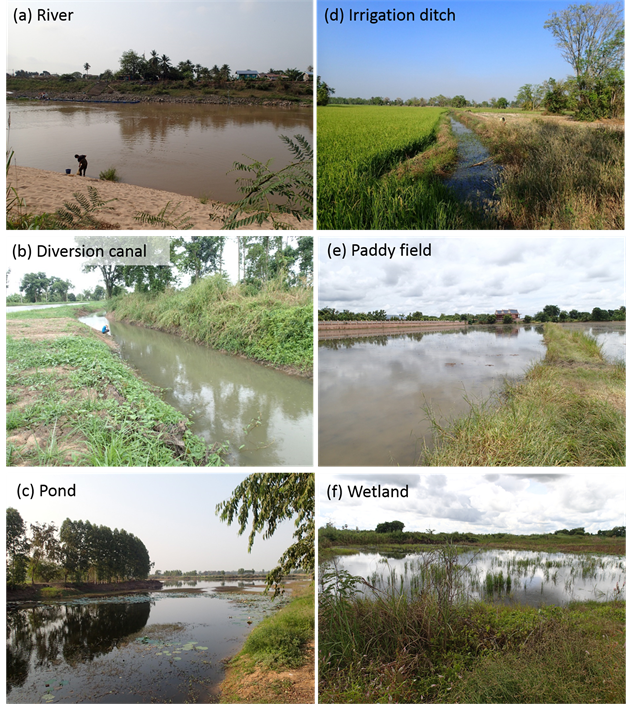
Luckily, their wide range in habitat preferences make them easy to accommodate in aquariums! They don’t particularly care about flow(as long as they have areas to rest) or particular hardscape elements.
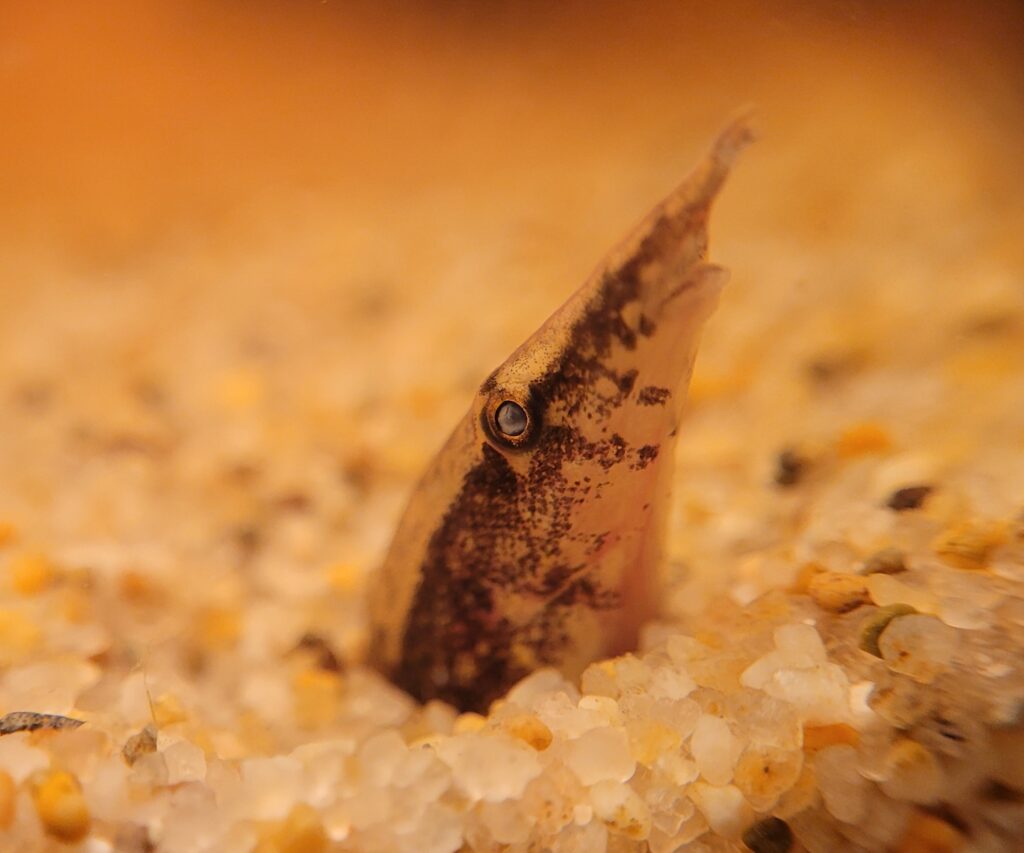
One of the most important aspects of their habitat, however, is having a nice soft, fine substrate. Like most small spiny eels, when this species is adjusting to a new environment or when they are perturbed, they do bury themselves in the sand.
I like to keep these guys in planted tanks. Having plants gives them more places to feel safe, a benefit that most fish enjoy. If you choose to not keep them with plants, just make sure they have many things to hide in. They do well in any lighting level as long as there are some shaded areas that they can relax in.
Behavior
Like all eels, Macrognathus circumcinctus has an excellent sense of smell. Their noses are a bit smaller in proportion compared to other eels, but they still put it to good use by poking around for food. Speaking of food, these guys are absolute gluttons, especially females. Females especially will gorge themselves with food until their stomach is all fat and lumpy. Their eagerness to eat a variety of frozen foods is one reason why these eels are definitely a great eel for aquariums.
Their eyesight is great as well, and they often like to just observe the world going on outside of the tank. Like many other species, they also become quite personable towards the person that feeds them and aren’t afraid to come snootle your fingers if they think you have food.
Some people will say that they are nocturnal, but mine gladly hang out and eat during the day. In fact, I often find them resting at night as if they adapt their schedule to accommodate my schedule!
One thing to keep in mind when wanting multiple M. circumcinctus in a tank is that they can be mean to each other and Macrognathus maculatus. Particularly certain larger females will chase and strike at other individuals. This usually does not cause physical damage, but the social damage causes stress and commonly makes the victim not eat and/or hide. Luckily, they usually do great as the only eel in a tank or if you have a tank large enough for a roommate to be free from one another. They are highly individual though, so always observe the social behavior of your eels.
Tank Mates
Macrognathus circumcinctus does well with a variety of tank mates. If your community tank already has fish in it, these are a great species to add in. They tolerate community fish that are active and quick, such as rainbowfish, but they do poorly with aggressive fish like most cichlids(the exception being dwarf South American cichlids). They also share the bottom of the tank pretty well with other bottom-dwellers like corydoras, gobies, and plecos.
Breeding Macrognathus circumcinctus
Spawning Conditions
Pair of 1 male, 1 female
Temperature: 82-84F
Light cycle: 8hrs on/16hrs off
Outdoor season: spring
pH: 6.4-7.0
GH: 2-8 dGH
KH: 0-2 dKH
Nitrate: 0ppm
* I didn’t see any spawning behavior associated with water change or the weather. Appears to spawn spontaneously.
Males vs females
Macrognathus circumcinctus is perhaps the easiest spiny eel to determine gender. Differentiation of males and females for this species is much easier once they reach around 3 inches long.
- Generally once they are well established, females are much thicker than males. My females have always gotten generally longer/larger than males, as well.
- The females develop what’s called a, “papillae” that they will use to lay eggs. This structure is distinct, usually dark colored, spine at their vent.
- I have observed noticeably different behavior/personality between males and females. Although this isn’t a determinate method, I believe it worthy of mentioning. Females tend to be more bold and lazy, whereas males are more energetic but also nervous. A female is more likely to confidently shove her way through a crowd to ask for food. Males are more wary of crowds and will quickly dart in to get food.
Interactions between males and females are very fun to watch. One of the most important things about breeding these eels is pairing them up and seeing if they have chemistry. Spiny eels in general are so particular and specific about who they have a romantic relationship with. And like with people, it takes a while for a pair to bond, if they are going to bond at all. It takes even longer for them to actually get comfortable enough with each other to start spawning. Generally, one of three things will happen when paired up:
- They develop a perfect relationship.
- The male doesn’t know how to ask her out on a date and their relationship goes nowhere.
- The female doesn’t want a boyfriend, his ego gets crushed, nobody’s happy.
Females do whatever they want whenever they want, but a doting male will pick up on her subtleties. In the best dating scenario, males always keep an eye on the female. If she’s hanging out in a hide, he usually knows she’s not in the mood, but if she comes out to cruise around, he will attempt to approach her. And if she gives her eel-consent, he will get flirty.
I even see males watch what the female eats then indulge in the foods she eats when he has never shown interest in those foods before! These men pay attention!
Spawning and Parental Behavior
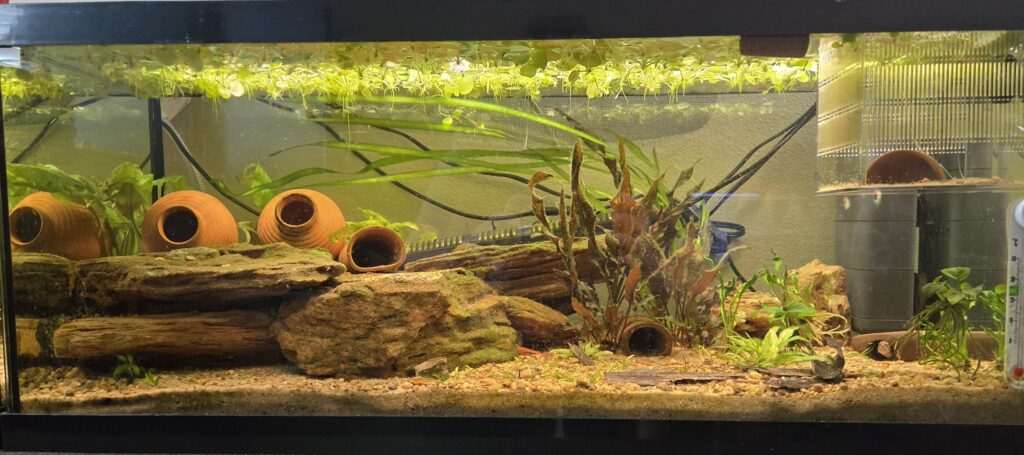
One day, I heard small gravel being thrown around in a tank. It took me a few hours to see that it was my pair of M. circumcinctus rustling around in the gravel to lay eggs. The male was coaxing the female to a corner behind a clay pot, where she would wiggle her body and nestle her papillae under the clay pot into the gravel. For the entire day, they would do this, take a break, then lay some more eggs in the same place. I was careful not to stand in front of them too much because they’d get distracted by me.
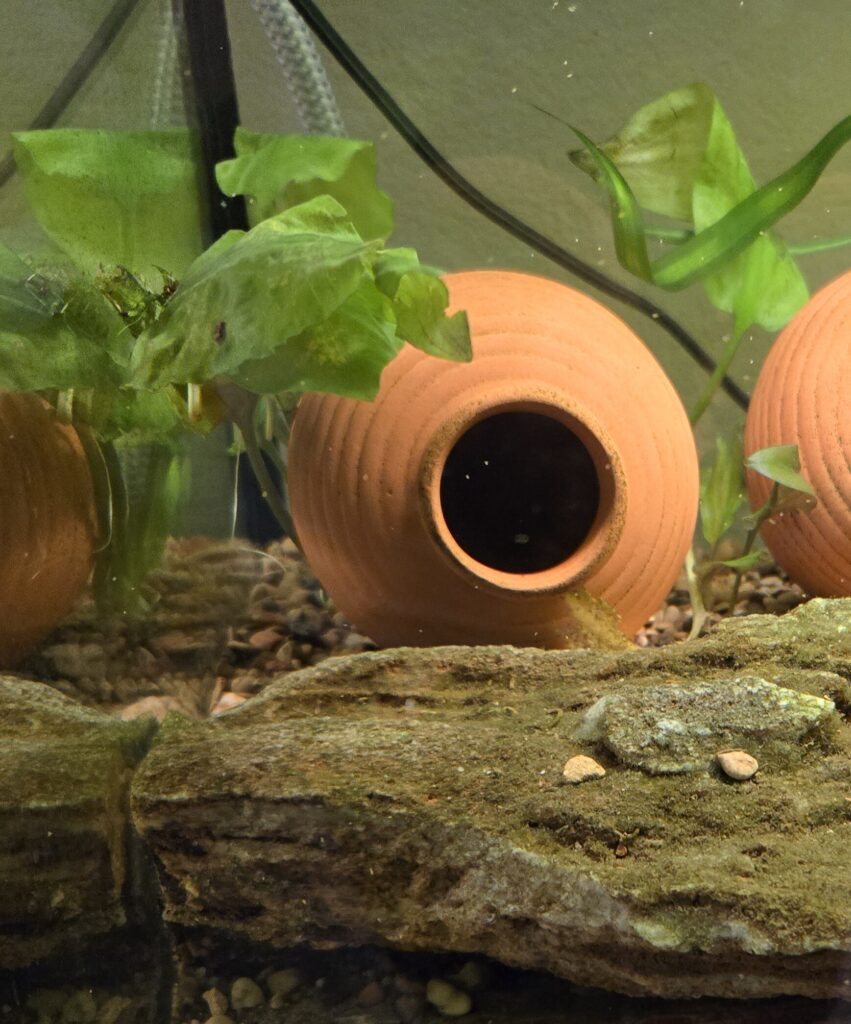
After the eggs were laid, the female went back to doing her usual and the male actually stayed in the corner where the eggs were. I noticed he kept the area clean from mulm and small debris. He watched over the corner until a week later when the fry hatched.
Rearing Fry
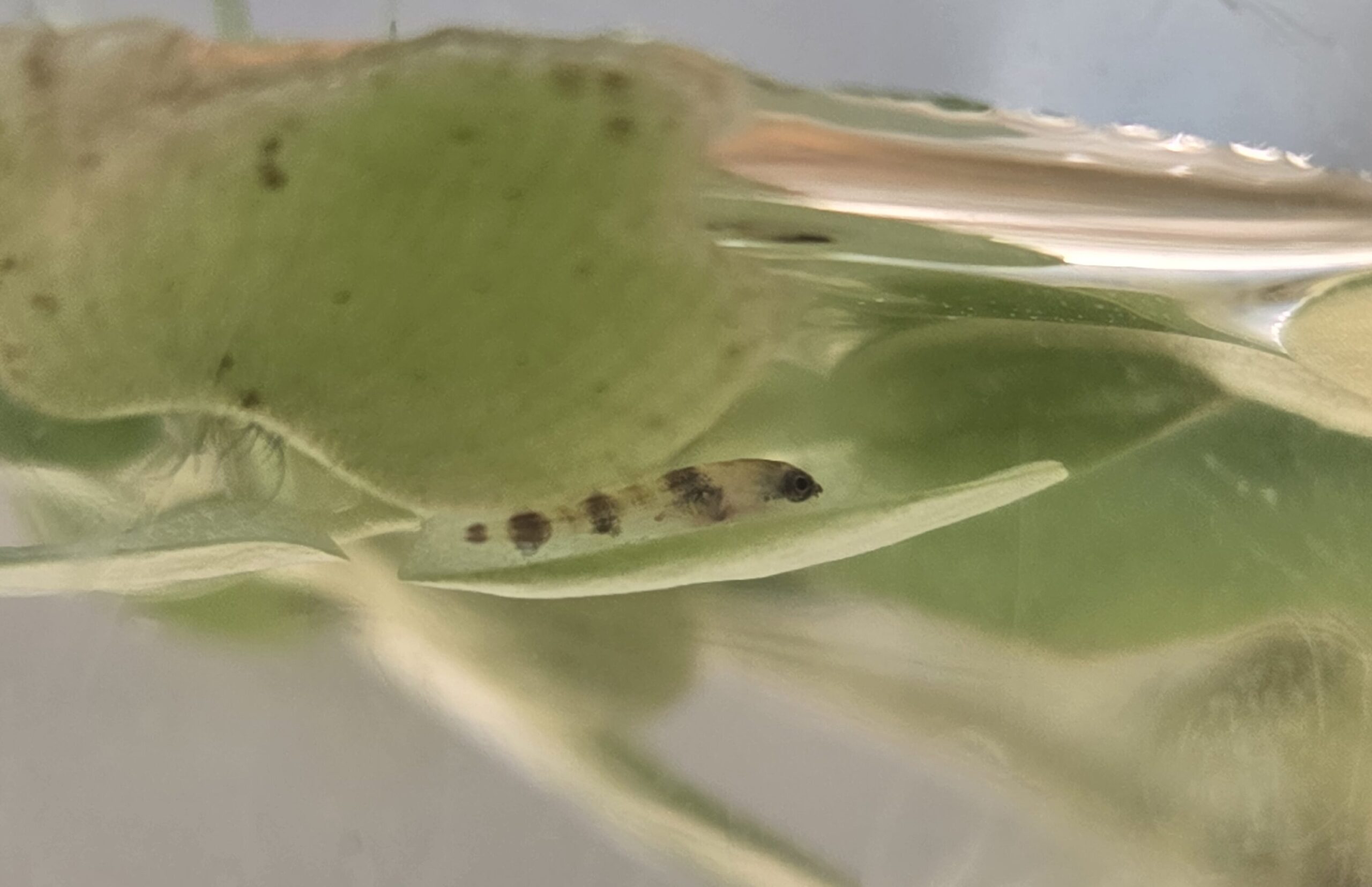
About a week after laying the eggs, I was cleaning the tank and there were teeny tiny striped fry swimming around! Their yolks had almost all been absorbed by this time. I scooped them up and put them into a breeder box inside the tank. I separated them to make it easier for me to feed them and make sure they could find food. Neither of the parents ever attempted to eat the fry, so if feeding the fry weren’t a concern, they could have stayed with their parents.
Getting the fry started was somewhat of a challenge because they only wanted live food. They are basically just eyeballs with a tail at this stage, so they take moving food seriously. Luckily, I was able to get live baby brine shrimp and feed that to them once a day. It was enough to keep them fat and they grew quickly.
After less than two weeks, they were 0.5inch long and started taking frozen baby brine shrimp. At 1 month old, they were chowing down on frozen mini-bloodworms chopped into tiny pieces. When transitioning them, I did mix in some frozen fish eggs, frozen cyclops, and fresh-squeezed earthworm juice to help entice them. Since then, they happily take just about any frozen food and live earthworms. They have never shown interest in pellets, so I did not try to force them onto pellets.
Even as teeny tinies, they liked sitting in floating plants/debris so I always provided them with stuff to sit in at the surface. I also gave them some fine sand, but they never dug into it so next time I might try no sand to make it easier to keep them clean. As far as hidey stuff goes, I gave them little plants and a couple little caves for the little guys to hide in.
After 3-4 months, they were approaching 1.5inches long, so I added them in with their parents. Their mom is often sitting in her favorite tube hide, watching the kids play about. Through the process of raising them, I did not lose any fry and have successfully raised all of them to subadults!